
A Necessary Myth?
by John Clarke
In defeat does there need to be a victory, some person or event that can be held up as a symbol of national pride? Anzac Cove was the site of an Australian military failure, but the Anzacs have become a symbol of national fortitude and courage.
At the October meetingthe guest speaker was philosopher and teacher George Djukic. The topic of his speech was the German icon, the Trümmerfrauen (Rubble Women). Throughout Germany – in Berlin, in Dresden, Hamburg, Bremen, Wurzburg – there are monuments in honour of the Rubble Women.
At the end of World War II Germany was a devastated nation. Its cities, laid waste by bombing raid after bombing raid, were in ruins. It is estimated there were 400 million cubic metres of rubble to be cleared before there could be any dream of the nation’s re-emergence. And with so few able-bodied men how was that to be achieved?
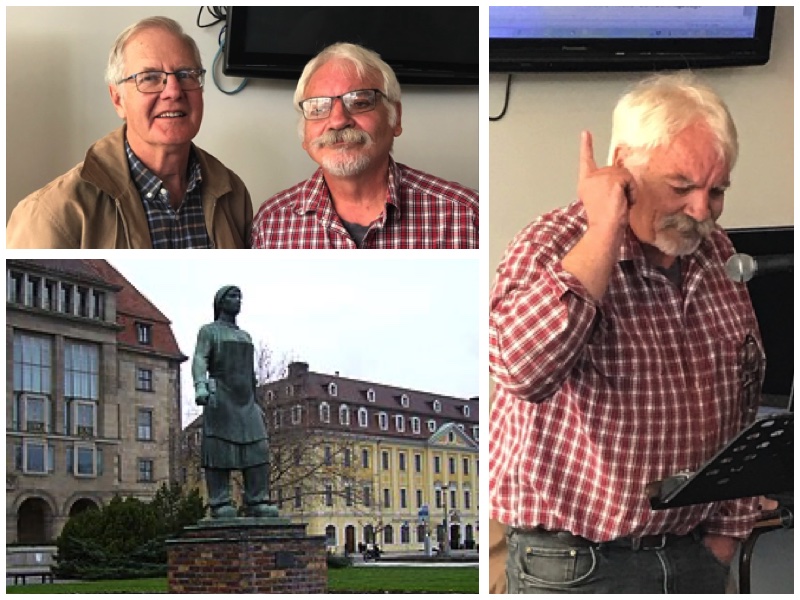
George Djukic presented the popular, accepted explanation: “It is said that ordinary German women spontaneously came to all German streets in droves, rolled up their sleeves and cleared the cities of rubble with their bare hands and simple tools.” And so “the Trümmerfrauen entered the collective memory as selfless and heroic, even almost superhuman women.”
But is it the truth?
To some extent it was true of Berlin, where the word Trümmerfrauen was coined. At least in the years immediately following the war. 26,000 women with few tools spent long hours clearing away bricks, twisted metal and air raid remnants. But that number is only a small percentage of the able female population – there were 500,000 women aged between 20 and 39 in Berlin in 1947 – and was their labour voluntary? Members of the Nazi party, both men and women, were forced into labour gangs.
Throughout Germany 3.6 million of the sixteen million homes in 62 cities had been destroyed. Women workers were needed, but as George Djukic pointed out, altruism and patriotism provided little motivation. The population was starving. The women worked for a daily bowl of soup and a meagre food ration, enough to feed only one person, not enough to provide for families. Many were forced to work during the day and prostitute themselves at night. While traditionally men fight the wars, in the aftermath of war it is the women who suffer.
The attitude towards women workers differed between the East and West. In the Communist controlled East women were expected to work alongside men and were projected as willing participants in the creation of an ideal Socialist State. In the West as the number of able-bodied men increased and machinery became available, women were expected to return to traditional female roles.
The courage of the post War German women and their determination to survive cannot be questioned. And perhaps it is fitting that they have become a part of German national history and pride. The Trümmerfrauen may be a myth, but they are a myth that Germany needed.